A free body. A calm child.
The first months and years are a period of intense adaptation. In just a few seasons, the child goes through birth and discovers food, sleep, movement, emotions and the first experiences of life in a group.
At Inné, we don’t treat an isolated symptom. We support the child as a whole: their body, their tensions, their energy, their perceptions and the way they adapt to what they are going through.


A child’s body is a sacred space.
Every cell, every emotion, every perception and every vibration plays a part in shaping the child.
Birth, being carried, learning, falls, growth or strong emotions can leave physical, neurological and energetic tension. When it builds up, it can hinder the body’s free flow and affect sleep, digestion, breathing, posture, attention or behaviour.
The Inné approach links advances in neurology, quantum physics and biohacking with the wisdom of ancient traditions. It does not separate the body from energy, nor physical manifestations from what the child experiences and feels.
Understanding what is seeking to regain its balance — and supporting that movementEach age has its own adaptations.
Supporting the first months.
Birth, carrying positions, long hours lying down and first feeding experiences place intense demands on an infant’s body.
In particular, we support birth-related tension, a preferred head position, sucking difficulties, colic, reflux, digestive discomfort, restless sleep and the first stages of motor development.
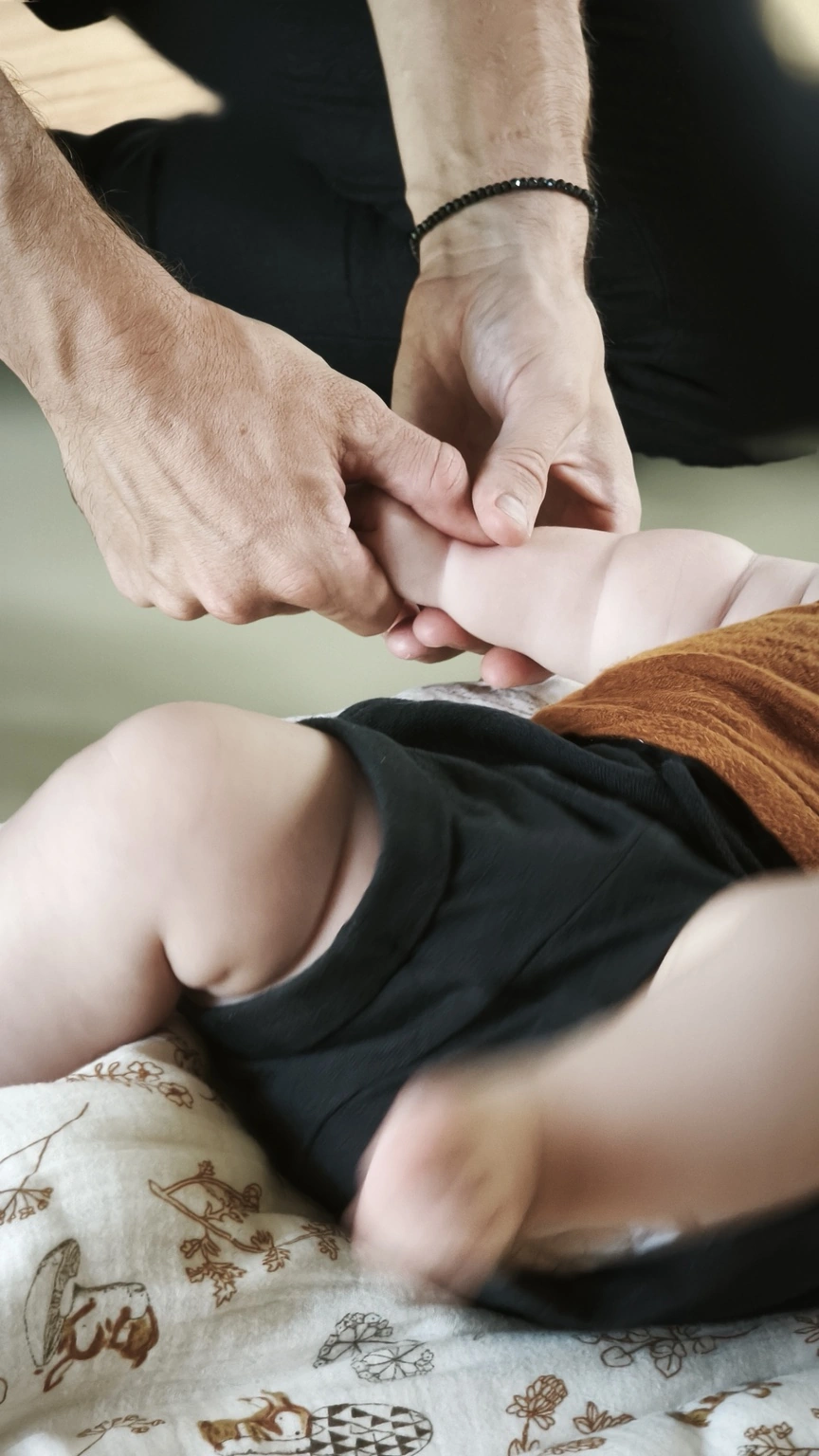
The touch remains minimal, close to the pressure of a caress, to respect a body that is still taking shape.
Supporting a growing body.
Children grow in fits and starts, and their bodies follow suit. Learning to walk, repeated falls, a school bag, sport, screens, diet, emotions or hypersensitivity can leave traces on their posture, their receptiveness and their ability to self-regulate.
The session helps them feel more at ease in their body, recover better and make full use of their energy to grow, learn and play.
What the body can express.
Difficulty falling asleep, waking in the night, restlessness or unrefreshing sleep. The session supports the nervous system towards greater calm and receptiveness.
Colic, reflux, spitting up, a tense tummy or discomfort after meals. The work seeks to ease tension and support smoother digestion.
Head turned mostly to one side, plagiocephaly, asymmetries, tension, delays in weight-bearing or discomfort in certain positions. The adjustment aims to restore freedom of movement and more balanced support.
Sucking, nursing, a restrictive tongue or lip tie, starting solids or selective eating. The session supports the mouth, jaw, skull and all the structures involved in oral function.
Asthma, breathing difficulties, a feeling of tightness or tension in the chest. The work focuses in particular on the mobility of the rib cage and diaphragm, to support freer breathing.
Recurring rhinitis or ear infections, allergies, hypersensitivities or an inflammatory terrain. Our support aims to sustain the body’s natural resources and its capacity to adapt.
Restlessness, hypersensitivity, overflowing emotions or difficulty concentrating. The session helps the child regulate their nervous system and find more inner calm.
Understand before adjusting.
-
Before the meeting An in-depth preliminary assessment
From their personal account, parents fill in an assessment covering pregnancy, birth, feeding, sleep, development and any difficulties currently observed.
-
The conversation Attentive listening
The meeting begins by listening closely to your child’s story and to what you notice day to day.
-
The assessment Observing how the system organises itself
Alexis assesses posture, mobility, tension, weight-bearing and the way the child’s system organises itself.
-
The session Gentle, gradual adjustments
The adjustments are gentle, gradual and suited to the child’s age. The parent stays present, and the session always follows the child’s pace and readiness.
-
Next steps Personalised advice
You receive personalised advice, along with a proposed programme of care built around your child’s needs and progress.
Giving the body back its freedom.
When tension eases and the body regains more mobility, the child has more resources to adapt.
Their sleep, digestion, breathing, posture, concentration or ability to settle may then change. Each child responds in their own way: some changes come quickly, others build gradually.
Our role is to observe, adjust and support this movement with precision, without ever forcing the child’s natural pace.
Inné’s care complements the paediatric follow-up and the health professionals who look after the childSupporting what is taking shape today.
A first meeting to understand what your child is going through, observe their body and offer them a session fully adapted to their needs.